

Bookeeper is a modern bookkeeping service designed to keep your business organised, accurate, and confident with its numbers. We manage your day-to-day bookkeeping so you can focus on running your business, while your accountant or BAS agent handles the lodgements.
- Sydney, NSW
- 0451081081
- customer@bookeeper.com.au
- www.bookeeper.com.au
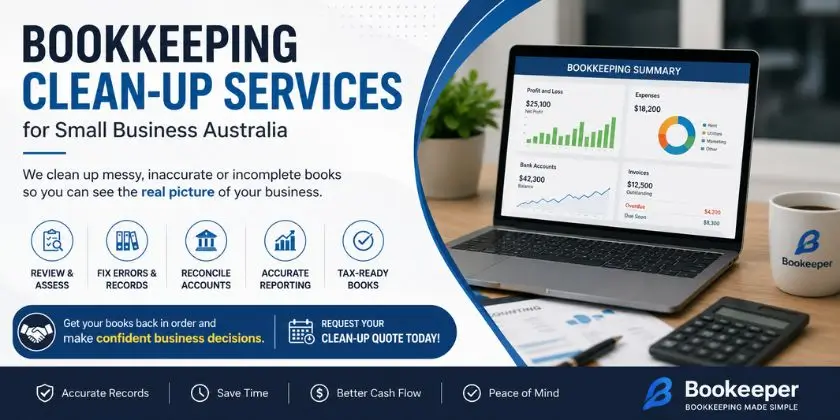
Bookkeeping Clean-Up Services for Small Business Australia
Messy Books? Let’s Get Your Business Finances Back on Track
Messy or inaccurate bookkeeping can make it difficult to understand what is really happening in your business.
Bookeeper provides bookkeeping clean-up services for small businesses across Australia, helping business owners correct bookkeeping errors, reconcile accounts and organise incomplete or inconsistent financial records.
Whether you’re dealing with uncategorised transactions, duplicate entries, unreconciled bank accounts, incorrect payment allocations or financial reports that don’t look right, we can review your existing books and identify what needs attention.
Our goal is to bring your bookkeeping back to an accurate, organised and manageable position so you have clearer financial information and records that are easier for your accountant or registered BAS agent to review.
Need help fixing messy or inaccurate books? Request a tailored bookkeeping clean-up quote today.

Messy Books? Let’s Get Them Back in Order
Not sure what’s wrong with your bookkeeping? Bookeeper can review your records, identify the issues and explain what needs to be cleaned up.
- Fixed Monthly Pricing
- Xero & MYOB Specialists
- GST & BAS Support
- 100% Australian Support
No obligation. We’ll review your situation and provide a clear scope of work.
What Is Bookkeeping Clean-Up?
Bookkeeping clean-up is the process of reviewing existing financial records, identifying bookkeeping errors or inconsistencies and correcting the records so they more accurately reflect the financial activity of the business.
A clean-up may be required when bookkeeping has been maintained inconsistently, accounts have not been reconciled regularly or transactions have been recorded incorrectly.
Common bookkeeping problems may include:
- Unreconciled bank and credit card accounts
- Duplicate transactions
- Missing transactions
- Incorrect expense categorisation
- Uncategorised transactions
- Customer payments allocated incorrectly
- Supplier bills recorded incorrectly
- Old outstanding invoices or bills
- Incorrect account balances
- Financial reports that do not match the underlying records
Once we understand the condition of your books, we can establish a structured process for correcting the bookkeeping issues identified.
Bookkeeping Clean-Up vs Catch-Up Bookkeeping
Clean-up bookkeeping and catch-up bookkeeping are related, but they solve different problems.
Bookkeeping clean-up is generally needed when your financial records exist but contain errors, incorrect categorisations, duplicate transactions, unreconciled accounts or other inconsistencies that need to be reviewed and corrected.
Catch-up bookkeeping is generally needed when bookkeeping has fallen behind and transactions, reconciliations or other records have not been completed for several weeks, months or longer.
Some businesses require both. For example, existing bookkeeping errors may need to be corrected before several months of outstanding transactions can be brought up to date.
If your main problem is that your books are several months behind, learn more about our catch-up bookkeeping service.
Our Bookkeeping Clean-Up Process
Every clean-up project is different. The amount of work required depends on the condition of your existing records, transaction volume, accounting software, number of accounts and how long bookkeeping problems have been accumulating.
1. Review and Assessment
We start by understanding your current bookkeeping situation and reviewing the records available.
Depending on the scope of the project, this may include reviewing:
- Bank and credit card accounts
- Transaction history
- Existing reconciliations
- Customer invoices and payments
- Supplier bills
- Expense categorisation
- General ledger accounts
- Available financial reports
- Uncategorised or unreconciled transactions
This initial review helps identify the areas requiring attention and allows us to determine an appropriate clean-up plan.
2. Correcting Bookkeeping Errors
Once the issues have been identified, we work through the agreed clean-up tasks.
Depending on the condition of your books, this may involve:
- Correcting incorrectly categorised transactions
- Reviewing duplicate transactions
- Recording missing transactions where appropriate
- Correcting payment allocations
- Reviewing uncategorised income and expenses
- Organising supplier bills
- Updating customer payment records
- Reviewing outstanding account balances
The objective is to create more consistent and reliable bookkeeping records.
3. Reconciling Bank and Credit Card Accounts
Reconciliation is an important part of bookkeeping clean-up.
We compare transactions recorded in your accounting software with the relevant bank and credit card statements to identify discrepancies.
This can help identify:
- Missing transactions
- Duplicate entries
- Incorrect transaction amounts
- Incorrect allocations
- Unrecorded bank fees
- Customer payments that have not been allocated
- Supplier payments recorded incorrectly
- Unreconciled balances
Regularly reconciled accounts provide a stronger foundation for accurate financial reporting.
4. Reviewing Financial Reports
Once the agreed corrections and reconciliations have been completed, relevant bookkeeping reports can be reviewed for inconsistencies.
Depending on your bookkeeping system and service scope, these may include:
- Profit and loss statement
- Balance sheet
- Accounts receivable report
- Accounts payable report
- General ledger
- Bank reconciliation reports
- Expense reports
Clean and organised records can make it easier for your accountant or registered BAS agent to review your financial information and identify any further work that may be required.
5. Final Review and Ongoing Recommendations
After the clean-up work is completed, we review the bookkeeping position and identify practical steps that may help prevent the same problems from building up again.
This might include establishing a regular reconciliation schedule, improving document management or moving to weekly, fortnightly or monthly bookkeeping support.
When Does a Small Business Need Bookkeeping Clean-Up?
Bookkeeping problems often build gradually. You may not realise there is an issue until reports stop making sense, accounts no longer reconcile or your accountant begins asking questions about your records.
Your business may benefit from bookkeeping clean-up if:
- Your bank accounts have not been reconciled regularly
- You have a large number of uncategorised transactions
- Your bookkeeping software contains duplicate entries
- Customer payments have been allocated incorrectly
- Supplier bills are missing or duplicated
- Account balances do not look correct
- Your financial reports do not make sense
- Your accountant has identified bookkeeping problems
- Your records have been managed inconsistently
- You are changing bookkeepers and want to organise your existing records
You don’t necessarily need to start your bookkeeping again. The first step is understanding what is wrong and what needs to be corrected.
Common Bookkeeping Problems We Can Help Correct
Unreconciled Accounts
Bank and credit card accounts that have not been reconciled can make it difficult to know whether the balances in your bookkeeping software are accurate.
Duplicate Transactions
Transactions may sometimes be entered or imported more than once, which can distort income, expenses and account balances.
Incorrect Transaction Categorisation
Transactions allocated to incorrect accounts can affect the usefulness and accuracy of financial reports.
Uncategorised Transactions
Large numbers of uncategorised transactions can make financial reporting incomplete and create additional work when records are reviewed.
Incorrect Customer Payment Allocations
Payments that have not been matched correctly to customer invoices can make accounts receivable reports inaccurate.
Supplier Bill Problems
Missing, duplicated or incorrectly recorded supplier bills can affect accounts payable records and make it harder to understand upcoming business expenses.
How Far Back Can Bookkeeping Be Cleaned Up?
The amount of historical bookkeeping that can be reviewed depends on the records available and the complexity of the work required.
Some businesses may only need a few months reviewed, while others may have bookkeeping issues that have accumulated over a much longer period.
Factors affecting the scope of a clean-up project can include:
- Number of months or years requiring review
- Monthly transaction volume
- Number of bank and credit card accounts
- Availability of bank statements and supporting documents
- Condition of the existing bookkeeping records
- Number and complexity of bookkeeping errors
- Accounts payable and receivable records
- Payroll records
- Accounting software being used
We can review your situation first and provide a clearer scope of the work required.
Bookkeeping Clean-Up for Xero, MYOB and QuickBooks
Bookeeper can assist with bookkeeping clean-up using commonly used cloud accounting platforms, including Xero, MYOB and QuickBooks.
The exact clean-up process depends on your existing software setup and the bookkeeping problems identified.
Where practical, we work within your existing accounting system to minimise disruption and maintain continuity in your financial records.
If you use Xero and need ongoing support after the clean-up, you can also explore our Xero bookkeeping services.
What Happens After Your Books Are Cleaned Up?
Cleaning up your books solves the existing problems, but maintaining them regularly can help prevent those problems from returning.
Once your bookkeeping is organised, you may choose to continue managing your records internally or move to regular professional bookkeeping support.
Bookeeper provides small business bookkeeping services for businesses that need ongoing assistance with transaction recording, reconciliations, accounts payable, accounts receivable, payroll records and financial reporting.
We also provide monthly bookkeeping services for businesses that want their financial records reviewed and maintained on a regular schedule.
The goal is to move from fixing bookkeeping problems to preventing them.
How Much Does Bookkeeping Clean-Up Cost?
There is no single price for every bookkeeping clean-up project because the amount of work required can vary significantly.
The cost may depend on:
- How far back the records need to be reviewed
- Number of transactions
- Number of bank and credit card accounts
- Condition of the existing books
- Number of unreconciled transactions
- Missing information or documents
- Accounting software
- Accounts payable and receivable issues
- Payroll records
- Complexity of the corrections required
After reviewing your bookkeeping situation, we can provide a clearer scope of work and a tailored quote.
Request a bookkeeping clean-up quote to find out what is required to get your books back in order.
Why Choose Bookeeper for Bookkeeping Clean-Up?
Cleaning up bookkeeping requires more than simply entering missing transactions. It requires understanding what has already been recorded, identifying inconsistencies and working through the issues in a structured way.
Bookeeper focuses on providing practical bookkeeping support for Australian small businesses.
Our clean-up service can help you:
- Identify bookkeeping errors and inconsistencies
- Reconcile bank and credit card accounts
- Organise transactions and financial records
- Correct agreed bookkeeping issues
- Improve the reliability of financial reports
- Prepare clearer records for your accountant or BAS agent
- Establish a more consistent bookkeeping process going forward
Once your records are organised, we can also provide ongoing bookkeeping support to help keep them that way.
Ready to Get Your Books Back in Order?
Stop working around unreconciled accounts, duplicate transactions and confusing financial records.
Bookeeper can review your existing bookkeeping, identify the issues and help you get your records back to a more organised position.
- Fixed Monthly Pricing
- Xero & MYOB Specialists
- GST & BAS Support
- 100% Australian Support
Frequently Asked Questions
What is bookkeeping clean-up?
Bookkeeping clean-up involves reviewing existing financial records, identifying errors or inconsistencies and correcting agreed bookkeeping issues. This may include reconciliation problems, duplicate transactions, incorrect categorisation, missing transactions and incorrect payment allocations.
How do I know if my books need cleaning up?
Common signs include unreconciled bank accounts, large numbers of uncategorised transactions, duplicate entries, incorrect account balances or financial reports that do not appear accurate.
What is the difference between clean-up and catch-up bookkeeping?
Clean-up bookkeeping focuses primarily on correcting problems within existing records. Catch-up bookkeeping focuses on completing bookkeeping that has fallen behind. Some businesses require both services.
Can you clean up bookkeeping that is several years old?
Potentially. The scope depends on the records and supporting information available, transaction volume and complexity of the bookkeeping issues. We can review the situation before determining what work is required.
Can you fix unreconciled bank and credit card accounts?
Reconciliation is commonly part of bookkeeping clean-up. We can review recorded transactions against available bank or credit card statements and identify discrepancies that need attention.
Can you clean up Xero, MYOB or QuickBooks bookkeeping?
Yes. Bookeeper can work with commonly used accounting platforms including Xero, MYOB and QuickBooks, depending on your existing setup and service requirements.
How long does bookkeeping clean-up take?
The timeframe depends on how much historical bookkeeping needs to be reviewed, transaction volume, the number of accounts, the condition of the existing records and whether supporting documents are readily available.
How much does bookkeeping clean-up cost?
Pricing depends on the amount and complexity of the work required. We review factors such as transaction volume, number of accounts, historical periods requiring review and the condition of the existing books before providing a tailored quote.
What happens after my bookkeeping is cleaned up?
Once the clean-up is complete, you can maintain the books internally or move to regular bookkeeping support. Weekly, fortnightly or monthly bookkeeping can help prevent the same issues from accumulating again.